Digital Detox: What It Is, Benefits and How to Do One
A digital detox is a deliberate break from your phone and social media. What it does for sleep and focus, what research says, and how to make it last.
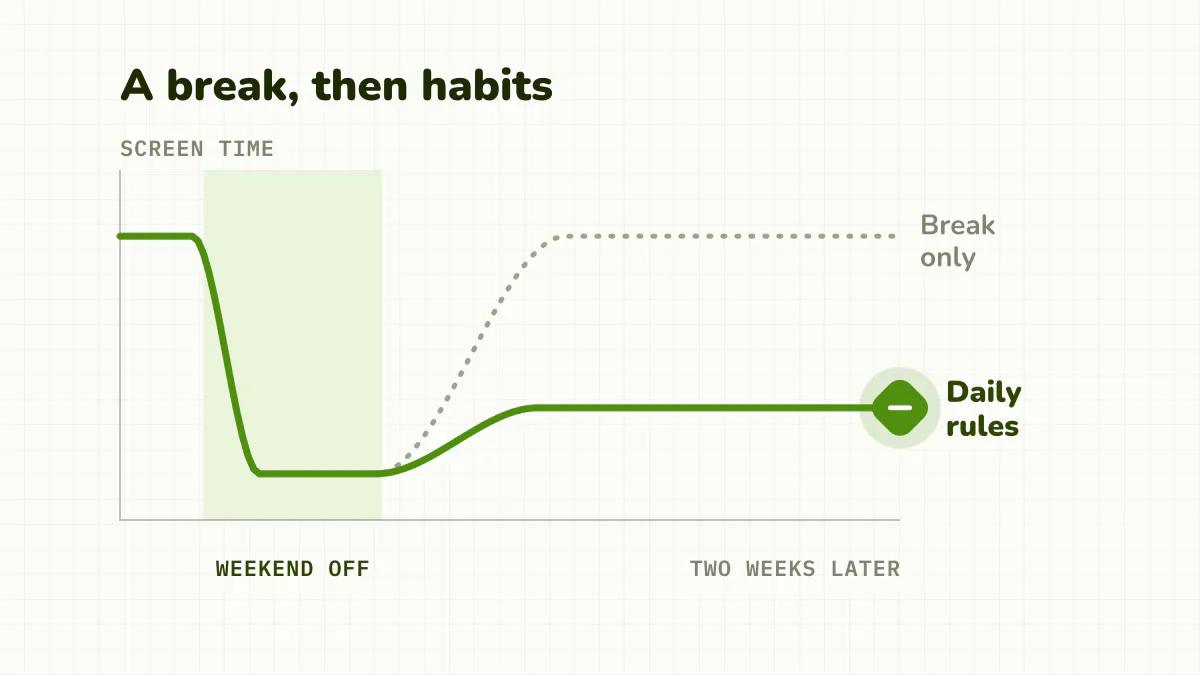
A digital detox is a set period when you deliberately cut back on your phone, social media and other screens to rest your attention. Done well, it pays off in better sleep, sharper focus, less background anxiety and often one to two hours a day back. You don't need to delete everything: the version that lasts is a short break that turns into a few daily rules.
Quick answer
- A digital detox is a break from compulsive screen use, from one evening to a month.
- It works: in a 2025 trial, 91% of people who blocked mobile internet for two weeks improved on attention, mental health or well-being.
- Target your two or three worst apps, not "the phone".
- Turn the break into daily rules, and put a real barrier on compulsive scrolling so the change survives tired evenings.
What is a digital detox?
It is a period when you reduce screen use on purpose to rest your attention. People also call it a screen detox, a phone detox or a social media detox, depending on what they cut. The word suggests a radical cure, but it is really about retraining your relationship with your phone: fewer automatic reflexes, more chosen use.
The goal isn't living without a smartphone. It is putting the tool back in its place, so you use it when you need it instead of it pulling you by default.
Signs you need a digital detox
You don't need a diagnosis. If three or more of these sound familiar, a break will help:
- You pick up your phone without deciding to, then forget why.
- A feed is the first thing you see in the morning and the last thing at night.
- You open an app "for a second" and look up twenty minutes later.
- You feel worse after scrolling, not better.
- You feel your phone buzz when it didn't (phantom vibrations).
- A book, a film or a conversation feels hard to stay with.
For a fuller picture, take the 10-question phone addiction test.
Does a digital detox actually work?
Yes, with one condition. Here is what changes, and the mechanism behind each.
- Better sleep. A bright screen close to your face at night slows the rise of melatonin, the hormone that readies you for sleep. A tense message or autoplaying video also keeps your brain on alert. An hour without screens before bed works on both.
- Focus you get back. When you jump from a task to a notification, part of your attention stays stuck on the interruption. Sophie Leroy called this attention residue in a 2009 study. Gloria Mark's research found average attention on one screen fell from about 2.5 minutes in 2004 to roughly 47 seconds today. Fewer interruptions, longer focus.
- Less background anxiety. Feeds serve a nonstop reel of edited lives that make yours feel flat. Each notification is a small "what am I missing?" that never quite closes. Distance from the feeds cuts that noise at the source.
- Time that reappears. Scrolling hides in the cracks: the queue, the ad break, the two minutes before a meeting. Cut it and many people find one to two hours a day they didn't see leaving.
The research backs this up. In a 2025 randomized trial in PNAS Nexus, Kostadin Kushlev and colleagues had 467 people block mobile internet on their phones for two weeks. 91% improved on at least one of attention, mental health or well-being, and the gain in sustained attention matched reversing about ten years of age-related decline.
The condition: the gains last as long as the change does. Results vary between studies, and a break that ends with the old habits back on Monday fades with them. That's why the method below starts small and ends with rules that stay. Detox itself grew out of work with Swiss universities and hospitals on what actually helps people cut compulsive use (our research).
Which kind of detox do you need?
Pick the one that matches what is actually pulling you.
Social media detox
You pause the feeds (Instagram, TikTok, X, YouTube) and keep messages, maps and calls. It is the easiest place to start, because the feeds are usually where the hours go. Block them on your computer too, or the scrolling just moves to the laptop: see how to block social media.
Phone detox
You put the phone itself at a distance: not in the bedroom, not at the table, not in the first hour of the day. Switching to grayscale makes the screen less inviting while you're at it.
Dopamine detox
The popular version promises to "reset" your dopamine by avoiding all stimulation. That part is a myth, but cutting the cues that trigger the reach does work. Our dopamine detox guide separates the two.
How do you start without cracking?
The golden rule: don't cut everything at once. A brutal detox creates a craving, and the craving sends you back to square one.
- Observe before you cut. Find the two or three apps that take most of your time. It is almost never "the phone", but one feed: Reels, TikTok, X.
- Reduce the triggers. Turn off non-essential notifications and move time-sink apps off your home screen. You need fewer invitations, not more willpower.
- Create screen-free moments. Protect the first hour after waking, meals, and the last hour before sleep. That's where scrolling does the most damage.
- Line up an alternative. Scrolling fills boredom, waiting and fatigue. Keep a book, a walk or a notes app within reach. See what to do instead of scrolling.
- Put a real barrier on compulsive scrolling. This makes the rest hold. Detox (iPhone and iPad, paid with a free trial) uses a session limit: a quick glance goes through, but once you have scrolled the chosen apps too long in one stretch, they lock for a short break while your other apps stay free. Add schedules for protected hours. Unlike Screen Time's daily cap, there's no single tap to dismiss it.
How long should a digital detox last?
Each length answers a different need. Start with the easiest and build up. For day-by-day plans, use our weekend, 7-day and 30-day challenge.
A screen-free day
The entry format. Pick a rest day, usually Sunday. The night before, tell close people you'll be hard to reach, download directions and an offline playlist, and plan two or three hands-on activities: cooking, an outing, a book. Then put the phone in a drawer for genuine needs only. You'll notice how often your hand reaches for it, which is the point.
A detox weekend
Two days are enough to really unplug. The first is the hardest; the second turns surprisingly calm. Choose a setting that helps, like a hike or a place without Wi-Fi. Set one short window a day for urgent messages and leave the rest alone.
Every day
The most powerful over time. Instead of a blackout, add a few permanent rules one or two at a time: no phone before bed this week, no screens in the first hour next week, feeds capped after that. It's less dramatic than a weekend off-grid, but the effect doesn't stop on Monday.
How do you do a digital detox as a family?
Start with shared screen-free moments rather than individual bans: meals, the morning, the evening. Rules everyone agrees to hold up far better than rules imposed from above.
Model it first. Kids spot the hypocrisy of a parent who demands screen silence while scrolling at the table. Putting your own phone away beats any lecture.
The bottom line
A digital detox works as a wake-up call you turn into daily habits. Name your worst apps, cut the triggers, protect a few screen-free windows and line up something else to do. Then let a barrier hold the line when willpower runs out. Pick one rule and start tonight.
Frequently asked questions
What is a digital detox?
A period when you deliberately cut screen use, mainly your phone and social media, to rest your attention. It can last an evening, a weekend, or become a daily habit. The goal is using your phone by choice rather than reflex.
Does a digital detox actually work?
Yes, when it changes habits rather than just pausing them. In a 2025 randomized trial, 91% of people who blocked mobile internet for two weeks improved on attention, mental health or well-being.
How long should a digital detox last?
A day is enough to feel the difference and a weekend to really unplug. But a one-off break changes little on its own; pair it with a few daily rules so the effect sticks.
Do you have to delete social media to do a digital detox?
No, and it is rarely sustainable: most people reinstall within days. The durable approach keeps useful access, like messages, while blocking compulsive scrolling.
What is a social media detox?
A digital detox aimed at feeds only: you pause Instagram, TikTok, X or YouTube for a set time and keep messages, maps and calls. It is the easiest kind to start with.